Signed in as:
filler@godaddy.com
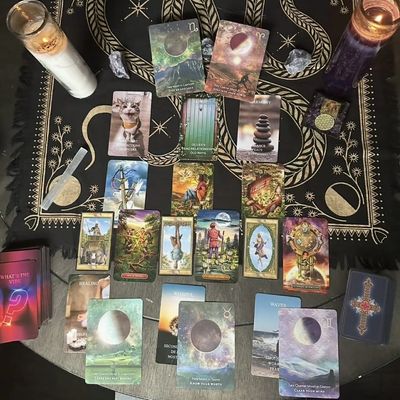
Trionfi refers to a 15th-century Italian game played with cards that included allegorical trump cards, which later became the Tarot deck. The cards depicted personifications of places or abstractions, reflecting a general English expression for the cards. "Trionfi" is used in the title of some modern Tarot decks, like the Trionfi della Luna Tarot, referencing their connection to the historical Italian tarocchi and Marseille-style decks.
The origins of tarot can be traced back to the mid-15th century in Europe, particularly Italy, where tarot cards were first used for a card game known as "tarocchi." These early decks, like the Visconti-Sforza Tarot, were beautifully illustrated and created for aristocratic families. It wasn't until the 18th century that tarot became associated with the mystical and occult traditions, thanks to figures like Antoine Court de Gébelin, who believed the cards held ancient Egyptian wisdom. Over time, the tarot evolved into a spiritual tool, embraced by mystics, esoteric societies, and eventually, the broader public.
Tarot card reading is a form of divination that uses a deck of symbolic cards to gain insight into a person's past, present, and potential future. The deck typically consists of 78 cards, divided into two main sections: the Major Arcana (22 cards representing major life themes or spiritual lessons) and the Minor Arcana (56 cards reflecting daily events, emotions, and experiences). Tarot readings are not necessarily about predicting the future with certainty but rather offering a reflective tool for deeper understanding, guidance, and clarity.
The Minor Arcana is further divided into four suits — Cups, Pentacles, Swords, and Wands — which correspond to different aspects of life: emotions, material matters, intellect, and creativity or action, respectively. Each suit has numbered cards from Ace to Ten and four court cards: Page, Knight, Queen, and King. The Major Arcana includes well-known cards like The Fool, The Lovers, Death, and The World, each with its own unique symbolism and interpretation. A reader interprets the cards based on their position in a layout (called a "spread"), the symbols on the cards, and their relationship to each other and the querent's question.
A tarot reading serves as a mirror to the subconscious, helping individuals explore thoughts, feelings, and patterns that may not be immediately obvious. While some approach the cards for fortune-telling, many use them as tools for self-reflection, decision-making, emotional healing, or spiritual exploration. A reading might answer questions such as: "What's blocking me from success?", "What do I need to understand about this relationship?", or "What's the best path forward?" The tarot doesn't claim to offer absolute truths, but rather perspectives that can empower the querent to make informed and conscious choices.
Tarot card reading is ultimately a tool of intuition, reflection, and personal growth. Whether one sees it as a mystical art or a psychological exercise, its enduring power lies in its ability to unlock insight and offer new perspectives. The archetypes and symbols of the tarot speak to universal human experiences, making them relatable across time and culture. While the future remains uncertain, tarot empowers individuals to approach life with greater awareness, intention, and inner trust.
Today, tarot has become widely popular, transcending religious and cultural boundaries. It is practiced both professionally and privately, and tarot decks now exist in countless artistic styles and themes, from traditional Rider-Waite decks to modern, inclusive versions that reflect a variety of identities and beliefs. Some readers combine tarot with other modalities like astrology, numerology, or psychology.
Online readings, tarot apps, and virtual communities have also made tarot more accessible than ever, allowing people to explore its wisdom regardless of location or background.